
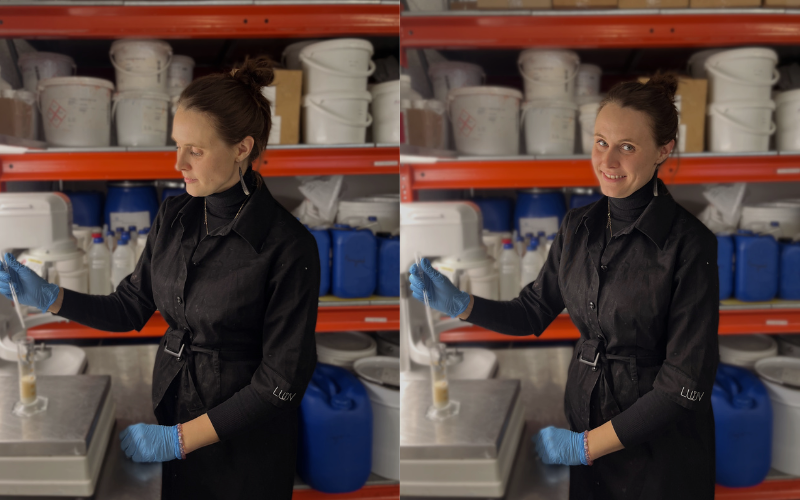
How does LUUV product development happen? Interview with a chemist
The world of natural cosmetics is evolving rapidly – every year brings new skincare trends, active ingredients, and promises. In this interview, LUUV chemist and product developer Helerin answers questions about skincare trends, ingredient selection, and explains how LUUV natural cosmetics are created.
1. What are currently the biggest trends in skincare and ingredients?
I think there are many trends, and they are constantly changing. The real question is: which trends actually work? From a chemist’s perspective, the most important thing is that an ingredient is as effective as possible while also remaining stable and safe in the formula.
One trend in the ingredient world that I personally really appreciate is that producing raw materials no longer requires enormous amounts of plant mass grown in fields just to extract a tiny drop of valuable compounds. Instead, totipotent plant cells are isolated and grown in bioreactors. This requires far less raw material and results in a much cleaner and more controlled ingredient. Sustainable science and standardized quality are the key values that matter most to me.
2. How does a LUUV product idea and formula come to life? Where do you begin, and what do you definitely avoid?
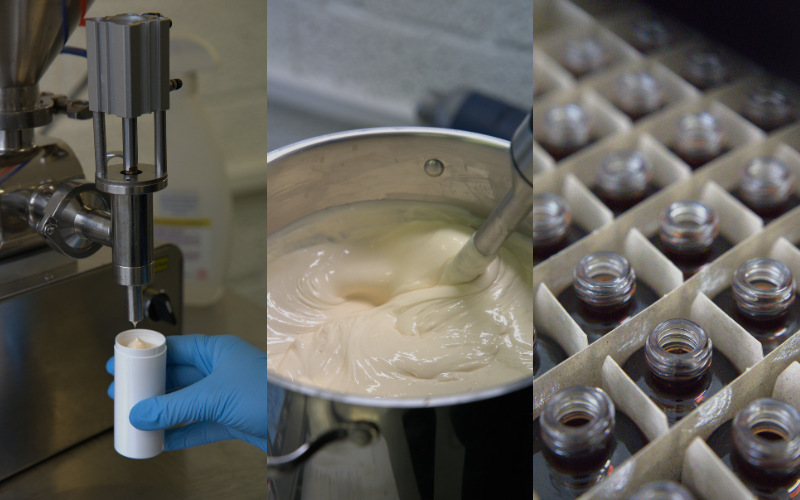
The idea, vision, and desire for a new product usually come from Marju. From there, we begin turning that vision into reality. We always start by selecting the product’s hero ingredient, and later build the entire formula around it by choosing supporting ingredients that enhance and complement the active ingredient.
There are definitely more ideas than products that eventually make it to the market. One important thing we try to avoid during development is making products that feel boring or ordinary. It means a lot when customer feedback confirms that people notice the same qualities we considered essential during development.
For example, ensuring that a vitamin C serum does not feel sticky, or that a cellulite treatment has a lightweight, fast-absorbing texture while still leaving the skin surprisingly soft. Finding the balance between making an active ingredient effective while also creating a product that feels pleasant to use is my daily challenge.
3. What is the most difficult part of developing natural cosmetics compared to conventional cosmetics?
Creating natural cosmetics is no longer as difficult as it used to be because natural alternatives now exist for most synthetic ingredients – and in many cases, they are even better than their synthetic predecessors.
The biggest challenge is achieving product stability and shelf life without silicones and parabens, which are almost indispensable helpers in conventional cosmetics. In natural cosmetics, ensuring stability and preservation is much more demanding work.
4. Are there any ingredients that are currently “popular” but are actually more of a marketing trick than truly beneficial?
People have become very aware of reading INCI lists, and I think that is wonderful because it helps them make better choices. INCI lists certainly provide a lot of information, but from my perspective as a chemist, it also makes me a little sad because a great deal of important information is actually left out.
A product may contain an extremely expensive, clinically tested, encapsulated, or highly stable ingredient, yet its INCI name can look exactly the same as the cheapest and simplest alternative.
For example, glycerin can either be a by-product of biodiesel production or produced palm-oil-free from rapeseed oil – yet the INCI name is still simply “Glycerin.” Another example is the word “extract.” Today, this can refer both to simple herbal infusions and to powerful biotechnologically produced stem cell cultures. In the INCI list they look identical, but chemically and financially they are worlds apart.
You cannot truly judge the quality or purity of raw materials based solely on the INCI list. That is why cosmetic certifications are valuable – they provide additional reassurance about aspects that are not visible from the ingredient list alone.
5. If you had to choose a few LUUV products you are most proud of, which would they be and what makes them special? And on the other hand, which products caused the biggest headaches?
Some products are wonderful because it only takes a few test versions to go from idea to the perfect result. One such product is the Glow Body Cream, which people seemed to love immediately and barely needed refinement.
At the same time, the C + D Vitamin Serum required more than 50 test batches before we achieved exactly the right skin feel. Fortunately, I’m now extremely happy with the final product – it turned out exactly right and was worth all the effort.
The hardest moments are when you personally run out of ideas on how to improve a formula further. For example, in LUUV’s early days, we had a rosehip shampoo that became known internally as “the formula that never got finished.”
6. What innovations can we expect from future LUUV products?
Some people have said that LUUV follows every trend too eagerly, but I don’t really agree with that. On the contrary, our active ingredients are carefully considered and selected through thorough research and development.
Yes, we stay informed about trends, but we only adopt the ones that truly impress us and that we genuinely trust. So, most likely, you can continue to expect innovative and surprising products from us in the future.
